
Introduction
Docs.google.com/document/__pii_deleted You’re scrolling through your files maybe sharing a Google Doc with a friend or a colleague, and suddenly—bam! You see something weird in the link: Docs.google.com/document/pii_deleted. It looks cryptic, almost like a secret code that only Google’s engineers understand.
But here’s the kicker—it’s not just you. Thousands of users across the globe encounter this odd-looking “pii_deleted” segment. So, what exactly is it? Why does it pop up? Is it a glitch, a hidden safety mechanism, or something even bigger?
In this article, we’re pulling back the digital curtain to explore the quirks of Docs.google.com/document/pii_deleted. We’ll examine the tech behind it, the privacy concerns it touches, and the lessons we can learn about digital safety. Stick around—this rabbit hole is worth exploring!
What Exactly Is Docs.google.com/document/pii_deleted?
To begin, let’s break it down:
-
Docs.google.com → That’s just Google Docs’ standard domain. Nothing odd there.
-
/document/ → This specifies that it’s pointing toward a document file. Again, pretty standard.
-
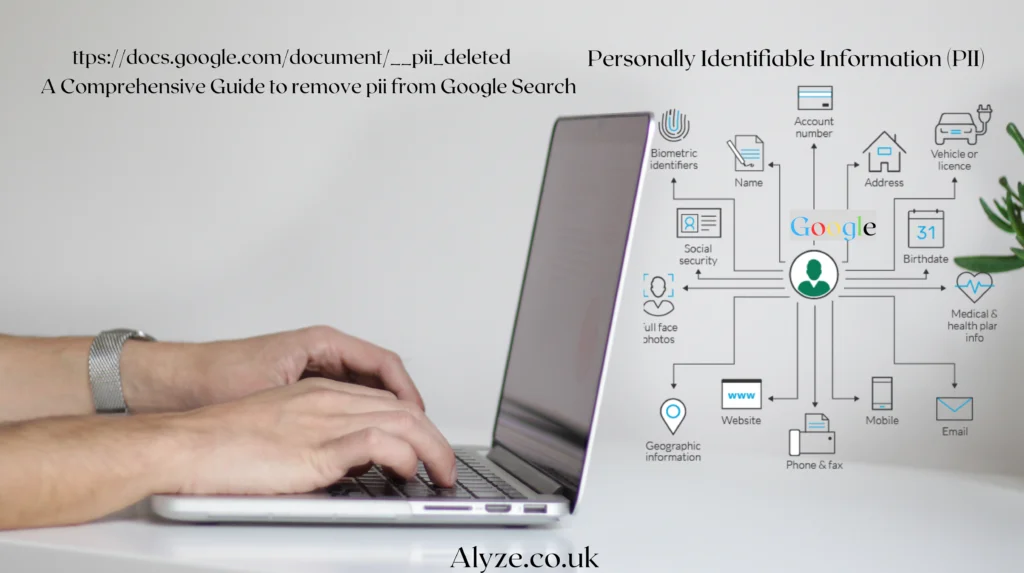
pii_deleted → Aha! Here’s the oddball. “PII” stands for Personally Identifiable Information. And when you see “deleted” slapped next to it, it signals Google has scrubbed something sensitive from the visible link.
In plain English, Google is basically saying:
“Hey, there was some personal info here—maybe an email, a phone number, or something else—but we’ve replaced it with this placeholder for your protection.”
Pretty clever, right?
Why Does Google Do This?
Here’s the real question: why does this “pii deleted” replacement happen in the first place?
1. Privacy Protection
Google doesn’t want people’s personal info showing up in shared links. Imagine sending a Doc to someone and accidentally exposing your full email or ID in the URL—bad news, right?
2. Accidental Sharing
Sometimes, users copy-paste sensitive info into links or document names without realizing it. Google’s filter kicks in and scrubs it clean.
3. Compliance with Data Regulations
Ever heard of GDPR or CCPA? Tech giants like Google must follow strict laws about data protection. Masking PII in public-facing links is one way to stay compliant.
The Curious Case of User Reactions
When people stumble across Docs.google.com/document/pii_deleted, they usually react in one of three ways:
-
Confusion:
“Wait—did I break my doc? Where’s my content?” -
Suspicion:
“Is this some kind of hack? Did someone mess with my link?” -
Relief (after a quick Google search):
“Oh, it’s just Google trying to keep things private.”
It’s almost like discovering a secret message in the margins of your favorite book.
The Technical Side: How Does It Work?
If we peek behind the digital curtain, the process is straightforward yet fascinating:
-
Input Scan → Google scans the document title, metadata, or link parameters.
-
PII Detection → If it detects something like an email, phone number, or social security number, it flags it.
-
Redaction → Instead of displaying the raw data, it swaps it with
__pii_deleted__. -
User-Safe URL → Voilà! You see the sanitized version of the link.
This entire sequence happens in milliseconds—faster than you can say, “Oops, did I just share my credit card number?”
Everyday Lessons We Can Learn from pii_deleted
While Docs.google.com/document/pii_deleted might seem like just a quirky placeholder, it actually teaches us some powerful lessons:
-
Lesson 1: Don’t Overshare.
If Google has to mask your info, you’re probably putting too much in the wrong places. -
Lesson 2: Automation Can Protect Us.
Instead of blaming Google for being “weird,” we should recognize that automation like this keeps us safe from accidental leaks. -
Lesson 3: Privacy Is Fragile.
If big companies are building systems to protect PII, that Docs.google.com/document/__pii_deleted__ tells you one thing—data privacy is always at risk.
When Should You Worry About Docs.google.com/document/pii_deleted?
Most of the time, you shouldn’t. It’s a safety feature. But there are a few cases where you might want to pay closer attention:
-
If it keeps happening repeatedly → This might suggest you’re consistently including sensitive data in your docs or links.
-
If your document isn’t accessible anymore → Rare, but possible. Check your sharing settings.
-
If you’re collaborating in a professional environment → Make sure you’re not accidentally embedding client or employee info in shared documents.
Practical Tips to Avoid PII Issues
Want to stay ahead of the curve? Here are some practical steps to ensure you don’t run into Docs.google.com/document/pii_deleted more than necessary:
-
Check Document Titles.
Don’t name your doc “JohnDoe_SSN_123-45-6789.doc.” That’s just Docs.google.com/document/__pii_deleted__ asking for trouble. -
Be Mindful with Copy-Paste.
Pasting sensitive info into shared docs might trigger the filter. -
Use Google’s Built-in Security Features.
Features like restricted access links and “Viewer only” permissions help safeguard your docs. -
Educate Your Team.
If you’re working in a group, make sure everyone knows not to stuff personal info into titles or links.
FAQs About Docs.google.com/document/pii_deleted
1. Does this mean my data is lost forever?
Nope! The placeholder only replaces the sensitive data in the URL. Your actual document content is still intact.
2. Can hackers exploit pii_deleted?
Not really. If anything, this makes it harder for hackers since they can’t see the scrubbed info.
3. Why me? I’ve never seen this before!
You probably haven’t named or shared a doc in a way that Docs.google.com/document/__pii_deleted__ included PII before. It’s not a glitch—it’s a protective measure.
4. Can I get rid of the placeholder?
Not directly. Google replaces it automatically, and for good reason. You wouldn’t want to “undo” a safety feature, right?
5. Does this only happen in Google Docs?
Mostly, yes. But similar PII redactions happen across Google services, from Sheets to Gmail links.
A Bigger Picture: The Future of Digital Privacy
When you really think about it, Docs.google.com/document/pii_deleted is more than a quirky placeholder—it’s a symbol. A reminder that in today’s world, privacy isn’t guaranteed; it has to be built, coded, and enforced.
Big Tech companies know that one accidental data leak could mean millions in fines and shattered trust. So, they create safeguards like this. In the future, we’ll probably see even more aggressive redactions, encrypted URLs, and anonymization tools.
And honestly? That’s not a bad thing.
Conclusion
At first glance, Docs.google.com/document/pii_deleted might Docs.google.com/document/__pii_deleted__ look like a broken link or some mysterious code you’re not supposed to see. But as we’ve uncovered, it’s actually a neat little feature designed to keep your private information private.
So the next time you stumble across it, don’t panic. Smile, because that strange placeholder means Google’s got your back. In a world where digital privacy feels like a balancing act, even small safeguards can make a world of difference.
Key Takeaways:
-
“pii_deleted” means sensitive data has been Docs.google.com/document/__pii_deleted__ scrubbed from your Google Doc link.
-
It’s there to protect you, not confuse you.
-
The lesson? Be mindful with your digital footprints.
Because at the end of the day, your privacy isn’t just about what you share—it’s also about how technology helps you guard it.
